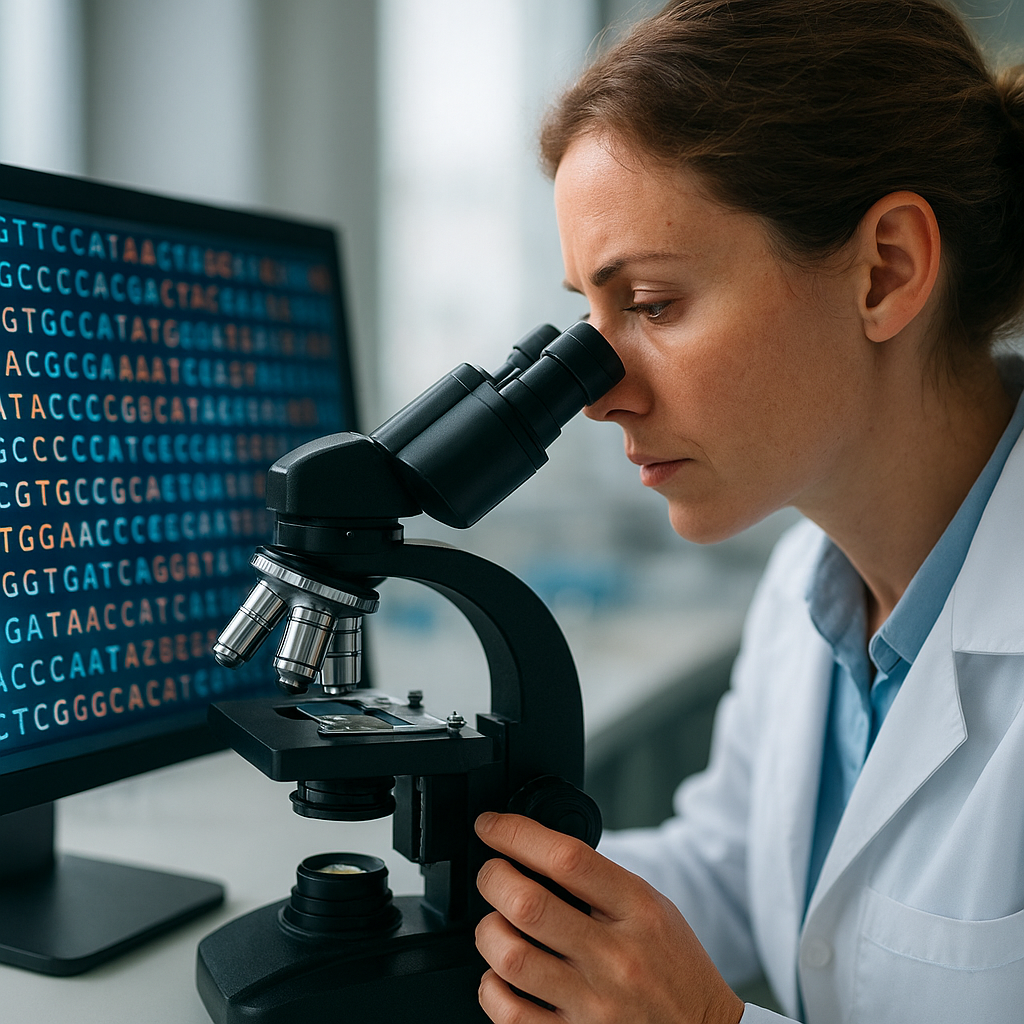
The study of heredity: Why Decoding Our Biological Blueprint Matters Today
I still remember sitting in a cramped university library back in my undergrad years, staring at a faded pedigree chart and realizing how little we actually understood about why we look and act the way we do. Fast forward to 2026, and the study of heredity has completely shifted from abstract textbook theories to practical tools that shape personalized medicine, crop optimization, and everyday health tracking. We are no longer guessing how traits pass down through generations. We are mapping them, predicting them, and in some cases, adjusting for them. If you are trying to wrap your head around how your own biology works, you are not alone. It takes time to process the sheer scale of molecular inheritance, but the payoff is worth every confused glance at a Punnett square.
From Mendel’s Peas To Modern Genomic Mapping
The journey started with Gregor Mendel and his garden experiments, but today’s landscape looks nothing like the 19th century. Back then, scientists could only observe phenotypic expression and make statistical guesses. Now, high-throughput sequencing lets us read entire genomes in hours. This transformation did not happen overnight. It took decades of trial, error, and computational breakthroughs. What used to require a full lab team and a budget that could buy a house can now be simulated on a standard laptop. The real challenge today is not accessing data, but learning how to filter the noise and understand what actually drives biological traits across generations.
“Understanding inheritance is no longer about memorizing dominant and recessive patterns. It is about reading the functional language of life itself.”
Core Terminology And Why It Feels So Dense
When you dive into this field, you will hit a wall of jargon almost immediately. Alleles, loci, epigenetic markers, chromosomal crossover, and polygenic risk scores are just the beginning. The complexity comes from the fact that inheritance is rarely a straight line. Environmental factors interact with genetic markers in ways we are still decoding. To make sense of it, I always break it down into manageable blocks rather than trying to swallow the whole textbook at once. Once you stop treating it as a memorization drill and start viewing it as a dynamic dataset, the entire picture clicks.
| Concept | Historical View | 2026 Reality |
|---|---|---|
| Trait Transmission | Simple dominant/recessive rules | Multifactorial and environment-modulated |
| Data Access | Lab-bound sequencing | Cloud-based genomic databases |
| Predictive Power | Probability estimates | AI-assisted phenotypic modeling |
How a dna and genes worksheet cuts through the noise
Most people get stuck because they try to learn passively. Reading about allele frequency or sex-linked inheritance is one thing, but actually tracking patterns step by step changes everything. A dna and genes worksheet forces you to apply the concepts instead of just nodding along. I have seen countless students and hobbyists finally click with the material once they started filling in real family pedigrees and calculating carrier probabilities. It turns abstract theory into a hands-on exercise that actually sticks. You do not need a PhD to start working with inheritance models. What you need is a clear framework and a resrouce that does not overwhelm you on day one.
- Maps out multi-generational trait patterns without getting lost in academic jargon
- Builds muscle memory for identifying autosomal versus sex-linked markers
- Provides a structured template to track environmental modifiers alongside genetic data
Bridging Classroom Theory And Real World Application
The shift toward interactive learning tools has been massive, especially as personal genomcs becomes mainstream. You can pull your own ancestry data, plug it into standard tracking sheets, and watch how chromosomal recombination actually plays out in your family tree. The algoritm behind modern inheritance modeling has simplified drastically, making it accessible for anyone willing to put in a few hours of focused practice. For those who want to verify current methodologies, the National Human Genome Research Institute maintains updated educational materials that align with modern standards available here.
Once you stop treating inheritance as a static diagram and start viewing it as a living system, the entire field opens up. You will catch patterns you missed before, ask sharper questions, and actually enjoy the process of untangling how your ancestors shaped your present. The tools are out there, and the learning curve flattens quickly once you commit to active practice instead of passive reading.